Navigating the complex world of tattoo machines as a beginner can feel incredibly overwhelming, can’t it? With an array of options from coil machines to rotary systems, cartridges, and traditional needles, knowing where to start often proves to be the biggest challenge. The video above sheds light on this very confusion, offering initial guidance on selecting your first beginner tattoo machine.
This article aims to deepen that discussion, expanding on the crucial factors introduced in the video. We will explore the technical nuances, provide additional context, and reinforce why certain machine types are better suited for those just starting their tattooing journey. Our goal is to equip you with the knowledge to make an informed decision that fosters growth and confidence in your burgeoning tattoo career.
Understanding the Core Needs of a Beginner Tattoo Machine
When embarking on your professional tattooing path, your initial equipment must be more than just functional; it needs to be an extension of your learning. The video correctly emphasizes the need for a machine that is easy to use, highly versatile, incredibly forgiving, and built to last. These attributes are not merely preferences but fundamental requirements for anyone mastering the craft.
Imagine if your very first machine was overly complex or prone to inconsistencies. Such a scenario could significantly hinder your progress and potentially damage your confidence, not to mention the client’s skin. A reliable beginner tattoo machine allows you to focus on developing fundamental techniques, rather than battling with temperamental equipment.
Why Forgiveness is Paramount: Give and Blowouts Explained
One of the most critical concepts for beginners is ‘give,’ which the video briefly touches upon. In a tattoo machine, ‘give’ refers to the suspension on the needle, essentially a shock-absorbing mechanism within the motor or cam. This feature is invaluable for beginners because it mitigates the risk of penetrating the skin too deeply.
Consider the learning curve: precise depth control takes time and practice. Without adequate give, excessive pressure can lead to what are known as ‘blowouts’ – where ink disperses unintentionally beneath the skin, creating blurry or unsightly lines. A machine with forgiving give acts as a crucial safety net, protecting both your client’s skin and the integrity of your artwork as you refine your touch.
Coil vs. Rotary: Why Rotary Machines Reign for Beginners
The distinction between coil and rotary machines is a pivotal point for new artists. The video strongly advises against coil and direct drive machines for beginners, and there’s sound reasoning behind this recommendation. Coil machines, while traditional and capable of producing exceptional work in expert hands, operate via an electromagnetic circuit that creates a distinct hammering action.
This powerful, less forgiving hit can be challenging for beginners to control consistently, making precise line work and shading more difficult. Furthermore, coil machines often require intricate tuning and maintenance, which can be an added complexity for someone focused on learning the core art form. They also tend to be louder and produce more vibration, adding to potential hand fatigue.
Rotary machines, conversely, utilize a small motor to drive the needle in a smooth, consistent motion. This inherent gentleness and the potential for built-in give make them significantly more forgiving. They are also quieter, lighter, and generally require less maintenance, allowing beginners to concentrate on technique rather as opposed to machine mechanics.
Grip Style and Ergonomics: A Personal Preference with Professional Impact
The comfort and control offered by a machine’s grip are often underestimated but are absolutely crucial for sustained work and optimal results. The video astutely points out that grip preference varies widely among artists – some prefer a wide, painterly hold, while others opt for a thinner grip that allows a finger to rest close to the cartridge, mimicking a drawing posture.
An ill-fitting grip can lead to an unnatural hand position, causing discomfort, fatigue, and even chronic issues over time. More immediately, it impacts control and precision, which directly affects the quality of your tattoos. For beginners, a machine with interchangeable grips offers the flexibility to experiment and find what feels most natural, contributing significantly to improved technique and endurance during long sessions.
Needle Systems: Cartridges, Traditional Needles, and Crossover Machines
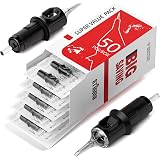
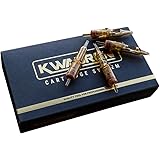
The choice between traditional needles and modern cartridge systems represents a significant fork in the road for tattoo artists. The video highlights the ease of use associated with cartridge systems, and this cannot be overstated for beginners. Cartridges encapsulate the needle, bar, and often a membrane, making them incredibly simple to pop in and out, facilitating quick and hygienic changes between different configurations.
Traditional needles, while offering distinct advantages for certain specialized techniques like heavy blackouts where thicker ‘mag’ needles are essential, require more involved setup and breakdown. They necessitate separate tubes, tips, and sterilization processes. For a beginner aiming for versatility across a range of styles, a cartridge-based rotary system simplifies the workflow, minimizing potential errors and maximizing time spent tattooing.
Crossover machines, which can accommodate both cartridge systems and traditional needles, offer unparalleled versatility. While they might be a consideration as an artist gains experience, a dedicated cartridge system is generally sufficient for a beginner’s initial needs. The vast majority of tattoo styles can be achieved effectively with a quality rotary cartridge machine, allowing new artists to explore diverse techniques without the added complexity of managing multiple needle types and setups from day one.
The Versatility Imperative: Embracing All Styles
As a budding tattoo artist, you might envision specializing immediately in a particular style, whether it’s realism, traditional, or fine line. However, the reality of starting out in the industry often means accepting a wide array of requests. As the video mentions, “you’re gonna be asked to do every single tattoo style” if you want to build a client base and gain experience.
This necessity underscores the importance of a versatile beginner tattoo machine. A machine capable of handling lines, shading, and color packing with relative ease allows you to tackle diverse client requests. This not only helps you earn money but also provides an invaluable learning experience, exposing you to different techniques and helping you discover where your true passions and talents lie within the broad spectrum of tattooing.
The ability to adapt your machine to various needs through adjustable settings and compatible cartridge configurations is crucial. Imagine if your machine only excelled at fine lines, but a client requested a bold traditional piece; you would be severely limited. A versatile machine empowers you to accept a wider range of projects, accelerating your learning and client acquisition.
Avoiding Pitfalls: The Dangers of Cheap and Pneumatic Machines
The temptation to opt for a cheap, entry-level machine can be strong, especially when financial resources are limited. However, the video delivers a stark warning against pneumatic tattoo machines and generic, low-cost options, particularly those from “knock-off brands.” This advice is paramount for a beginner’s success and reputation.
Pneumatic machines, which rely on compressed air, are notoriously inconsistent and unreliable, often failing to deliver the steady power and precision required for quality tattooing. Similarly, inexpensive, unbranded machines, often retailing for significantly less than the suggested ‘$400’ entry point for a professional tool, are a false economy. Their poor build quality, inconsistent motors, and lack of durability will ultimately cost you more in frustration, potential client dissatisfaction, and early replacement.
Investing in a reputable brand from the outset, even if it means a higher initial cost, ensures you have a dependable tool that performs consistently. This protects your clients from potential harm due to equipment failure and protects your budding reputation as an artist. A professional-grade machine provides the stability and reliability necessary for you to focus on your art, not on equipment malfunctions.
The Ideal Beginner Tattoo Machine: Pen-Style Rotary with Cartridges
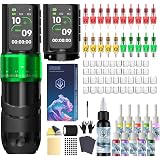
Pulling together all the essential criteria—ease of use, versatility, forgiveness, durability, and a professional build—leads to a clear recommendation: a pen-style rotary machine that utilizes a cartridge system. The video champions this type, specifically highlighting the Cheyenne Hawk Pen, and for good reason.
Pen-style machines mimic the natural feel of holding a pen or drawing implement, making them incredibly intuitive for artists accustomed to traditional art mediums. Their compact, balanced design reduces hand fatigue, allowing for longer, more comfortable tattooing sessions. Furthermore, their rotary motor design inherently offers the smooth, consistent power preferred for beginner learning.
Features to Look For: Adjustable Throw and Forgiving Give
Beyond the pen-style and cartridge compatibility, two features are particularly noteworthy: an easily adjustable throw and forgiving give. The ‘throw’ of a machine refers to how far the needle extends from the tip with each stroke. The ability to adjust this feature with a simple twist allows for quick adaptation between lining, shading, and color packing—each requiring different needle extensions for optimal results.
Combined with the forgiving give on the motor, these features empower beginners with greater control and reduce the risk of common mistakes like blowouts or inconsistent saturation. The exceptional build quality, as exemplified by the Cheyenne Hawk Pen, with its sturdy connection points, ensures reliability and longevity, a critical investment for any aspiring professional in 2024 and beyond.
While wireless tattoo machine options are becoming more prevalent in 2024, their potential bulkiness and the added hassle of battery recharging might introduce unnecessary complexities for a beginner. A high-quality wired pen-style rotary machine offers a dependable, streamlined experience, allowing you to focus entirely on honing your skills without distraction.
Dialing In Your Queries: Beginner Tattoo Machine Q&A
What type of tattoo machine is generally recommended for beginners?
For beginners, a pen-style rotary machine that uses cartridge systems is highly recommended. These machines are intuitive to hold, smooth in operation, and easy to maintain.
Why are rotary machines better for new artists compared to coil machines?
Rotary machines use a motor for a smooth, consistent needle motion, making them more forgiving, quieter, and easier to control. Coil machines, by contrast, have a powerful hammering action that is harder for beginners to master.
What does ‘give’ mean in a tattoo machine and why is it important for beginners?
In a tattoo machine, ‘give’ is a shock-absorbing mechanism on the needle that prevents it from going too deep into the skin. This feature is crucial for beginners as it helps prevent ‘blowouts’ and protects the client’s skin while learning precise depth control.
Why are cartridge systems beneficial for beginner tattoo artists?
Cartridge systems make it very easy to quickly and hygienically change between different needle configurations. They simplify the setup and breakdown process, allowing beginners to focus more on tattooing technique.
What kind of tattoo machines should beginners avoid?
Beginners should avoid cheap, generic, or ‘knock-off’ machines, as well as pneumatic machines. These often lack consistency, durability, and can hinder learning or lead to poor results.