Navigating the world of tattoo equipment can feel overwhelming when you are first starting out. With countless recommendations found online and a diverse array of machines available, it is often difficult to determine which option is truly the best tattoo machine for beginners.
If you have just watched the accompanying video, you now have a clearer picture of the primary types of machines. This article expands on those insights, providing a deeper dive into each machine, helping you confidently select your first tattoo machine, whether you are pursuing tattooing as a serious career or simply as a dedicated hobby.
Understanding Different Tattoo Machine Types for Beginners
When selecting your initial tattoo machine, it is helpful to be familiar with the fundamental categories that are commonly discussed. Each type functions differently and offers unique advantages and drawbacks, especially for those new to the craft.
1. Coil Tattoo Machines: The Traditional Workhorse
Coil machines are often considered the traditional choice in tattooing, having been around for many years. These machines operate using an electromagnetic field generated by two coils, which causes an armature bar to move rapidly up and down.
This movement drives the needle into and out of the skin, creating the tattoo. The rhythmic “buzzing” sound that is characteristic of tattoo shops often originates from these powerful coil machines.
Advantages of Coil Machines for New Tattoo Artists:
- Durability and Longevity: It is suggested that coil machines can last for many years, even decades. Their robust construction means they are built to endure, similar to a classic, well-maintained tool.
- Feedback and “Give”: The way coil machines operate allows for a subtle “give” when the needle contacts the skin. This can be beneficial for beginners, as it provides a slight buffer, reducing the likelihood of instantly “screwing up” a line by being too aggressive. Think of it like a spring-loaded tool that offers a bit of forgiveness.
- Hand Dexterity Training: Coil machines are noticeably heavier and produce a strong vibration during operation. While this might seem like a disadvantage, it is believed to contribute significantly to developing a stronger, more stable hand over time. This consistent resistance helps train the muscles in your hand, much like training with weights builds strength.
- Cost-Effective Consumables: These machines typically use traditional needles and tips, which are generally more affordable than the cartridge systems used by many rotary and pen machines. For someone on a budget, this can lead to substantial savings on supplies.
Considerations for Coil Machines:
- Noise Level: Coil machines are quite loud, producing that distinctive buzzing sound. While many artists grow to love it, it can be a significant change if you are used to quieter environments.
- Requires Two Machines: For comprehensive tattooing, two coil machines are typically needed: one specifically set up for lining (creating outlines) and another for shading (filling in color or creating gradients). This means a higher initial investment compared to a single versatile rotary machine.
- Setup Complexity: Setting up and tuning a coil machine can be more complex than a rotary, involving adjustments to springs, contact screws, and voltage to achieve optimal performance for lining or shading. However, many beginner-friendly coil machines come pre-tuned for their specific purpose.
2. Rotary Tattoo Machines: The Modern, Quiet Alternative
Rotary machines represent a significant evolution in tattoo technology, utilizing a small electric motor to move the needle. These machines are celebrated for their quieter operation and smoother, more consistent performance.
Several types of rotary machines are available, each with a slightly different mechanism for driving the needle. These include linear drive, direct drive, and swash plate rotary machines.
Exploring Rotary Machine Variations:
- Linear Drive Rotary: This type of machine uses a sliding bar to convert the motor’s rotary motion into a linear up-and-down motion for the needle. It is known for its smooth action.
- Direct Drive Rotary: As its name suggests, a direct drive machine connects the motor directly to the needle bar or a cam wheel. This direct connection often results in a powerful, consistent hit. The Dragonhawk Extreme 2, mentioned in the video, is an example of a popular direct drive rotary machine.
- Swash Plate Rotary: This variation uses a unique mechanism, often a cam that moves in an orbital fashion, allowing for a degree of “give” or adjustment in how hard the machine hits. While some artists appreciate this adjustability, it can be considered a bit unusual to master by others.
Advantages of Rotary Machines for Starters:
- Quiet Operation: One of the most significant benefits is their reduced noise level compared to coil machines. This creates a more serene working environment for both the artist and the client.
- Versatility: Many modern rotary machines, particularly direct drive models, are capable of both lining and shading with a single machine. This is achieved by adjusting the “stroke” of the machine, which dictates the needle’s travel depth and force.
- Adjustable Stroke: The stroke length on a rotary machine can often be adjusted, allowing artists to customize the machine’s impact for different tasks. A shorter stroke (e.g., 1.5-2.5mm) is generally preferred for fine lines and softer shading, while a longer stroke (e.g., 3.5-5mm) is suited for packing color and bolder lines. This adaptability is like having multiple tools in one.
- Less Skin Trauma: The smoother, more consistent action of a rotary machine is often said to be gentler on the skin, potentially leading to faster healing and less irritation for the client.
Considerations for Rotary Machines:
- Weight and Hand Training: Rotary machines are generally much lighter than coil machines. While this can reduce hand fatigue for some, it may not offer the same level of hand-strengthening benefits that coil machines provide for developing a stable tattooing grip.
- Cost: While some direct drive rotaries are quite affordable (around 3,500 PHP or $45-50 USD for basic models like the Dragonhawk Extreme 2), high-end models can be significantly more expensive.
3. Pen-Type Tattoo Machines: Ergonomics and Cartridges
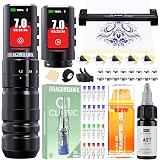
Pen-type machines are a specialized form of rotary machine designed to mimic the feel of holding a pen, offering exceptional ergonomics. These machines almost exclusively use cartridge needles, which integrate the needle and tube into a single, disposable unit.
This design is highly favored for its comfort, ease of use, and quick cartridge changes, making them popular among experienced artists and those prioritizing hygiene and efficiency.
Advantages of Pen Machines:
- Ergonomics: The pen-like grip is very comfortable for extended tattooing sessions, potentially reducing hand strain.
- Hygiene: Cartridge systems are known for their enhanced safety and hygiene, as they typically feature a membrane that prevents ink and bodily fluids from entering the machine.
- Quick Changes: Swapping between different needle configurations (e.g., from a liner to a shader) is incredibly fast and simple with cartridges.
Considerations for Pen Machines:
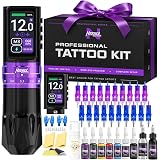
- Higher Cost: Pen-type machines are generally the most expensive option, with even basic wired models costing around 6,500-8,000 PHP. Wireless models, like the one shown, are significantly pricier. This high entry cost can be a barrier for beginners on a tight budget.
- Expensive Consumables: Cartridge needles, while convenient, are considerably more expensive than traditional needles. This ongoing cost can add up quickly, especially during the learning phase when many needles might be used for practice.
- Potential Learning “Skip”: While comfortable, starting directly with a pen machine might bypass some foundational learning experienced with coil machines, such as developing a stronger, more controlled hand or understanding basic machine mechanics.
Choosing Your First Tattoo Machine: What to Prioritize
After examining the types, the choice for your first tattoo machine for beginners often comes down to your budget, learning philosophy, and personal comfort. It is important that a machine is selected that will support your initial learning curve without overwhelming you.
Budget Considerations: Affordability vs. Value
For beginners, price is almost always a significant factor. It is important that the initial investment in a tattoo machine is manageable, allowing funds for other essential supplies like ink, practice skin, power supplies, and hygiene products.
A direct drive rotary machine, such as the Dragonhawk Extreme 2 mentioned in the video, is an attractive option due to its versatility and affordability, typically ranging from $45 to $50 USD. This machine is known for its ability to perform both lining and shading tasks effectively.
For those leaning towards coils, cheaper options are available from brands like Dragonhawk, costing around 2,000-2,500 PHP per machine. While two machines are needed (a liner and a shader), the combined cost can still be comparable to or even less than some mid-range rotaries.
Powering Your Machine: RCA vs. Clip Cord
Whether you choose a rotary or a coil machine, it will require a power supply. Machines typically connect via either an RCA or a clip cord. An RCA connection is a modern standard that provides a secure, constant power flow, often seen in higher-end equipment.
A clip cord connection is more traditional and still widely used, especially with coil machines. While some argue that RCA offers more stable power, for a beginner, the difference is negligible. Focus on the machine type rather than the connection type.
Building Hand Strength and Skill: The Coil Machine Advantage
For artists who value developing a strong foundation, the coil machine is frequently recommended. The weight and vibration of a coil machine are believed to be excellent for training hand dexterity and endurance. This continuous engagement of hand muscles can lead to superior control and stability in the long run.
Learning with a coil machine can be compared to learning to drive a manual car before an automatic. While potentially more challenging initially, the skills developed offer a deeper understanding and control that is invaluable. This foundational hand strength is critical for creating consistent lines and smooth shading, especially when your lines initially might have a 50% chance of looking “like crap,” as the video points out.
The Modern Convenience of Rotary Machines
For those who prioritize quiet operation, reduced hand fatigue, and the versatility of a single machine, a good quality direct drive rotary is an excellent choice. Its ability to handle both lining and shading tasks with an adjustable stroke makes it a highly efficient tool.
While it may not offer the same physical hand training as a coil machine, the consistency and ease of use of a rotary can allow beginners to focus more on technique and less on managing the machine’s inherent characteristics. The smoother operation also tends to be less traumatic to the skin, potentially aiding in client comfort and faster healing.
Your First Buzz: Beginner Tattoo Machine Q&A
What are the main types of tattoo machines available for beginners?
The three fundamental types of tattoo machines are coil machines, rotary machines, and pen-type machines. Each operates differently and has unique advantages and disadvantages for new artists.
What is a coil tattoo machine?
Coil tattoo machines are traditional machines that use electromagnetic fields to move a needle, creating a distinctive buzzing sound. They are known for their durability and can help beginners develop hand strength.
What is a rotary tattoo machine?
Rotary tattoo machines are modern machines that use a small electric motor to move the needle. They are generally quieter, smoother, and can often be used for both lining and shading with one machine.
What is a pen-type tattoo machine?
Pen-type tattoo machines are a specialized type of rotary machine designed to feel like holding a pen, offering great comfort. They almost exclusively use cartridge needles, which are convenient and hygienic.